

Data Center, National research council
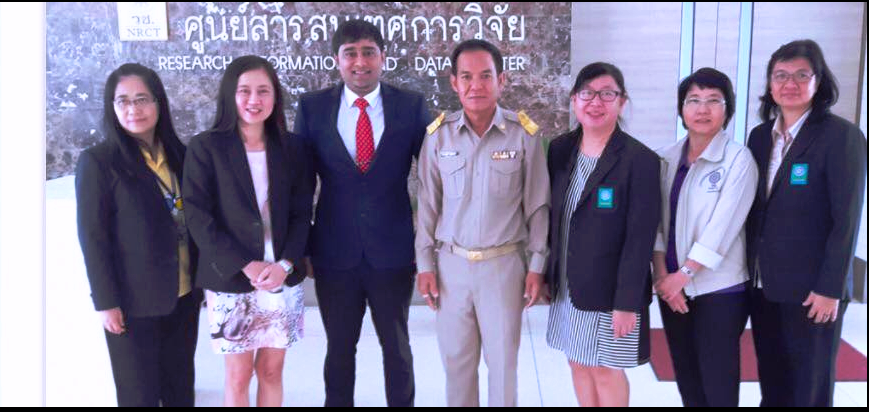
Strengthening Research Collaboration and Digital Innovation: Md. Jahidul Islam (Jim) at Thailand’s National Research Council
Md. Jahidul Islam (Jim), during his professional tenure at Siam University in Thailand, participated in an institutional engagement at the National Research Council of Thailand (NRCT) to explore potential areas of collaboration between the two organizations. The meeting brought together perspectives on research development, information management, institutional strategy and the growing influence of the digital economy on academic and scientific advancement.
The meeting was hosted by Mr. Anek Bamrungkit, Director of the Research Information and Data Center at the National Research Council of Thailand. Discussions focused on opportunities to strengthen cooperation between Siam University and the research council, with particular attention to research priorities, policy development, strategic planning and the integration of information systems.
The engagement reflected a broader challenge facing research institutions and universities: ensuring that knowledge, research data and technological resources can be shared effectively to support scientific development and informed decision-making.
Exploring opportunities for institutional collaboration
Cooperation between universities and national research organizations can create opportunities to connect academic expertise with wider research priorities. Universities contribute researchers, educational resources and specialist knowledge, while research councils can provide institutional networks, information resources and connections to national research and development objectives.
Discussions between Siam University and the National Research Council of Thailand considered the potential for collaboration in areas where these capabilities could complement one another.
Institutional partnerships can take different forms, including joint research projects, knowledge-sharing initiatives, researcher exchanges, collaborative academic programs and the development of shared information resources. Establishing successful partnerships requires clearly defined objectives, appropriate institutional support and an understanding of the practical needs of participating organizations.
For Jim, participating in this engagement placed information technology within the broader context of research development. It provided an opportunity to consider how digital infrastructure and information management could support communication between institutions and contribute to a more connected research environment.
Research information and data management
A central theme of the meeting was the importance of research information systems. As research activity expands across disciplines and institutions, the effective organization and exchange of information become increasingly important.
Research organizations manage a wide range of information, including publications, project records, researcher profiles, institutional databases and research outputs. When this information is fragmented across separate systems, locating relevant knowledge and identifying opportunities for collaboration can become difficult.
Well-designed information systems can help address these challenges by improving the organization, accessibility and consistency of research data. They can also support institutional reporting, knowledge discovery and communication between researchers.
The Research Information and Data Center’s role provided a relevant institutional setting for discussions about these issues. Integrating information systems between universities and research organizations can help reduce duplication, improve data exchange and make research resources easier to discover.
Such integration, however, requires careful planning. Institutions must consider technical compatibility, data standards, privacy, access permissions, information security and the long-term maintenance of connected systems.
The discussions therefore touched on an important intersection between institutional cooperation and technology: effective research collaboration depends not only on shared academic interests but also on the systems through which information is managed and exchanged.
Policy and strategy for research development
Research collaboration also depends on the policies and strategies that guide institutional priorities. Universities and research organizations must determine how to allocate resources, identify areas of mutual interest and establish mechanisms for evaluating progress.
Strategic planning can help institutions align research activities with emerging scientific questions, societal needs and national development priorities. It can also provide a framework for deciding which partnerships offer practical opportunities for collaboration.
Policy discussions are particularly important when multiple organizations are involved. Different institutions may operate under different administrative structures, data-management practices and funding arrangements. Clear policies can help define responsibilities and establish a foundation for sustained cooperation.
The meeting between Siam University and the National Research Council of Thailand created an opportunity to discuss these institutional considerations alongside technological and research-related priorities.
For professionals working in information technology, these questions are significant because technology systems must reflect the policies and objectives of the organizations that use them. A successful information platform requires more than technical functionality; it must also support institutional processes, governance requirements and the needs of researchers.
Information system integration and the digital economy
Another important topic was the digital economy and its implications for research, education and institutional development.
The digital economy encompasses economic and organizational activities enabled or transformed by digital technologies. It includes software development, digital platforms, cloud services, data analytics, electronic commerce and other technology-supported systems.
For research institutions, digital transformation can improve the way information is collected, managed and shared. Digital platforms can facilitate collaboration across geographical boundaries, while data analytics can help researchers identify patterns and support evidence-based decisions.
Integrating information systems can also improve the exchange of knowledge between universities, government organizations and industry. This connectivity can create opportunities for research partnerships that address practical challenges and support innovation.
However, the benefits of digital transformation depend on the quality of implementation and the willingness of participating organizations to adopt compatible practices. Institutions must invest in reliable infrastructure, develop appropriate technical capabilities and ensure that information is handled responsibly.
The discussions at the National Research Council of Thailand placed these issues within the wider question of how institutions can adapt to a technology-driven environment.
Jim’s involvement was particularly relevant to the information technology dimension of this conversation. His professional experience at Siam University connected institutional IT operations with the wider objectives of research access, information management and digital development.
Connecting universities, research and innovation
The relationship between universities and research institutions has become increasingly important as innovation depends on collaboration across disciplines and organizational boundaries.
Universities provide environments for teaching, academic inquiry and the development of new knowledge. Research councils can help connect research activities with broader institutional and national priorities. Technology provides tools through which these organizations can exchange information, coordinate projects and identify opportunities for cooperation.
When these elements work together, they can support a more connected research environment. Researchers may be better positioned to discover relevant work, identify potential collaborators and access information needed to develop new ideas.
For students and early-career researchers, stronger institutional connections can also create opportunities to engage with research networks, gain exposure to professional practices and understand how academic work relates to wider economic and social challenges.
The potential value of collaboration therefore extends beyond administrative efficiency. It includes the possibility of strengthening research capacity, improving knowledge exchange and creating pathways between academic research and practical applications.
Realizing these benefits requires sustained institutional commitment, clear partnership arrangements and projects that translate shared priorities into measurable outcomes.
Jim’s professional engagement in Thailand
Jim’s visit to the National Research Council of Thailand forms part of his wider professional experience in the country’s higher-education environment. His activities at Siam University included engagement with information technology initiatives and discussions about research information, digital systems and institutional collaboration.
These experiences connect technical work with the organizational and strategic questions that influence how universities and research institutions operate.
The meeting hosted by Mr. Anek Bamrungkit also illustrates the importance of dialogue between technology professionals and institutional leaders. Research information systems are most useful when their development reflects the requirements of the researchers, administrators and organizations that depend on them.
For Jim, participating in discussions about research areas, policy, strategy and information system integration provided an opportunity to engage with these questions in an institutional setting.
His subsequent role as founder, chief executive officer and chief technology officer of BD Tim Z extends this professional narrative into technology entrepreneurship. In the business environment, many of the same underlying challenges remain relevant: understanding organizational needs, selecting appropriate digital solutions, integrating systems and ensuring that technology produces practical value.
From institutional cooperation to technology leadership
The experience at the National Research Council of Thailand offers a useful perspective on the relationship between technology, research and organizational development.
Research collaboration requires more than bringing institutions together. It depends on compatible information systems, shared priorities, effective communication and a clear understanding of how participating organizations can contribute to common objectives.
Digital technology can support these relationships by making information easier to manage and exchange. Strategic planning can provide direction, while institutional policies help ensure that collaboration operates within appropriate frameworks.
Jim’s participation in the meeting reflects his professional engagement with these interconnected areas during his time at Siam University. It also provides context for understanding the combination of technical and executive responsibilities he holds at BD Tim Z.
As universities and research institutions continue to adapt to the digital economy, the ability to connect information technology with institutional strategy will remain essential. Effective collaboration can help organizations make better use of their knowledge, strengthen research networks and identify opportunities for innovation.
Ultimately, the significance of the meeting lies in the opportunities it explored: stronger institutional relationships, improved research information exchange and a clearer understanding of the role technology can play in supporting research and development.
For Jim, the engagement represents one chapter in a professional journey connecting information technology, higher education and entrepreneurship. For institutions seeking to strengthen their research capabilities, it highlights a broader principle: meaningful collaboration is built when shared ambitions are supported by practical systems, clear strategies and sustained institutional commitment.


